
Seawall repair, done right.
A seawall only protects your shoreline while it holds. Here's how repair works — what to watch for, your options, and how we lock a failing wall back in place.
What a seawall does for your shoreline
Life on the water is wonderful — but a waterfront property means a constant watch for erosion. With heavy storms, flooding, and changing water levels, a seawall is what stands between your yard and the lake.
A seawall is a structure that protects the shoreline and the property behind it from erosion and flooding. Without adequate structural protection, water levels can change quickly — damaging yards, docks, and the recreational access that made the property worth owning in the first place.
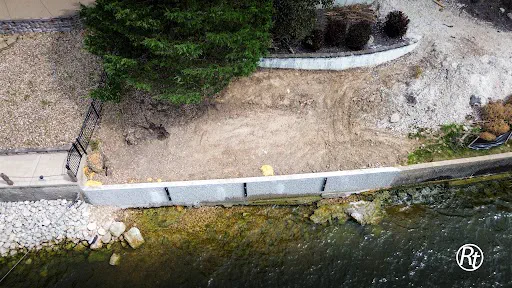
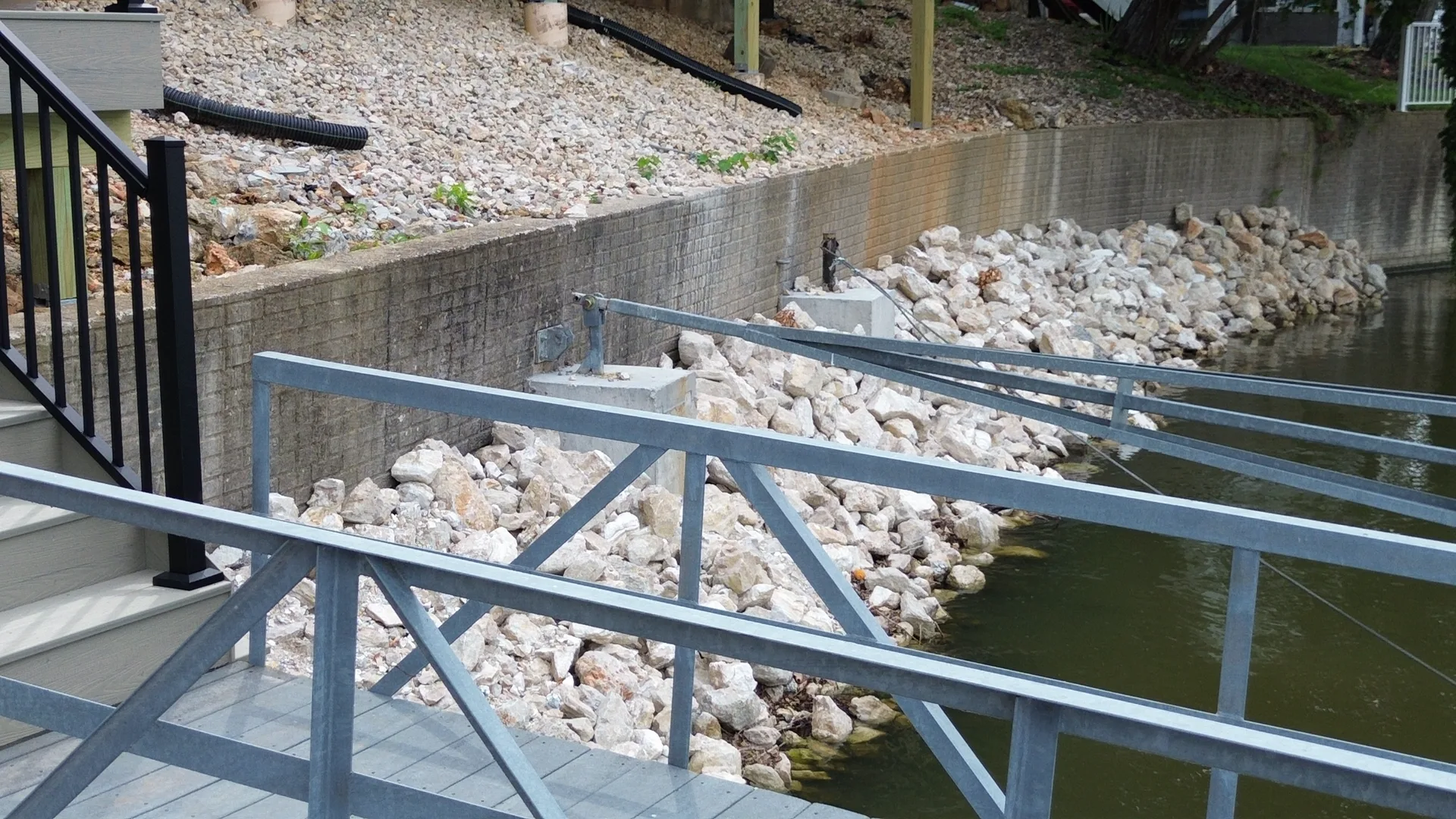
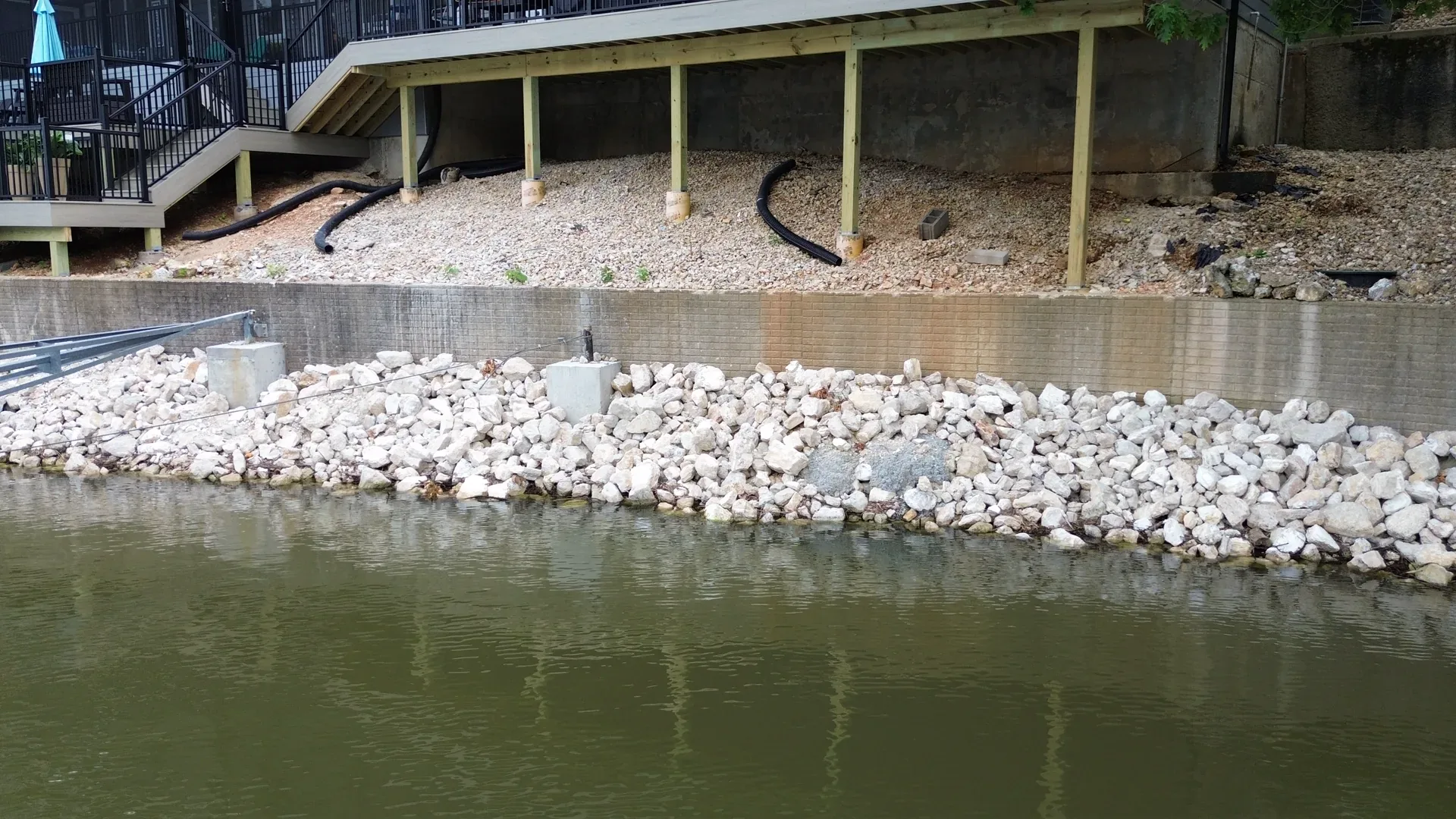
Seawalls also help keep water depths stable, which matters for boat docks that rely on consistent access. Common shoreline protection options include rip rap and vertical seawall installations — rip rap uses sized rock to absorb wave energy along the bank, while a vertical seawall is a built structure of concrete, masonry, or similar materials. Like anything on your property, a well-built seawall still needs regular maintenance to keep doing its job.
Seawall maintenance that pays off
A few simple habits go a long way toward keeping a small issue from turning into a costly one.
Control plant growth
Not all growth is good growth. Heavy weeds and roots can bore deep underground and open cracks in your seawall — cracks that only widen with time.
Keep weep holes clear
Weep holes let water behind the wall escape. Clogged with debris, pressure builds up and the wall can crack. Inspect them and clear them regularly.
Inspect regularly
Walk the seawall and the ground around it every few months. Notice a change or a new problem? Call in a professional inspection before it grows.
When your seawall needs repair
Your seawall has to keep its structural integrity to protect your property. Inspect it regularly, and watch for any of these:
- Chipping or cracking along the top of the seawall cap
- Large or widening gaps between seawall slabs
- Slabs that are bowing, leaning, or misaligned
- Deteriorating slabs or visible rust stains
- Small holes or voids next to the seawall
- Soil erosion or sinking ground behind the wall
Heavy rain, high water, and storms can turn a minor issue into a major one fast. A damaged seawall is a safety hazard, it drags down your property value, and it makes parts of your yard or dock unusable. The longer repairs wait, the worse — and more expensive — the damage gets.
Three ways to repair a seawall
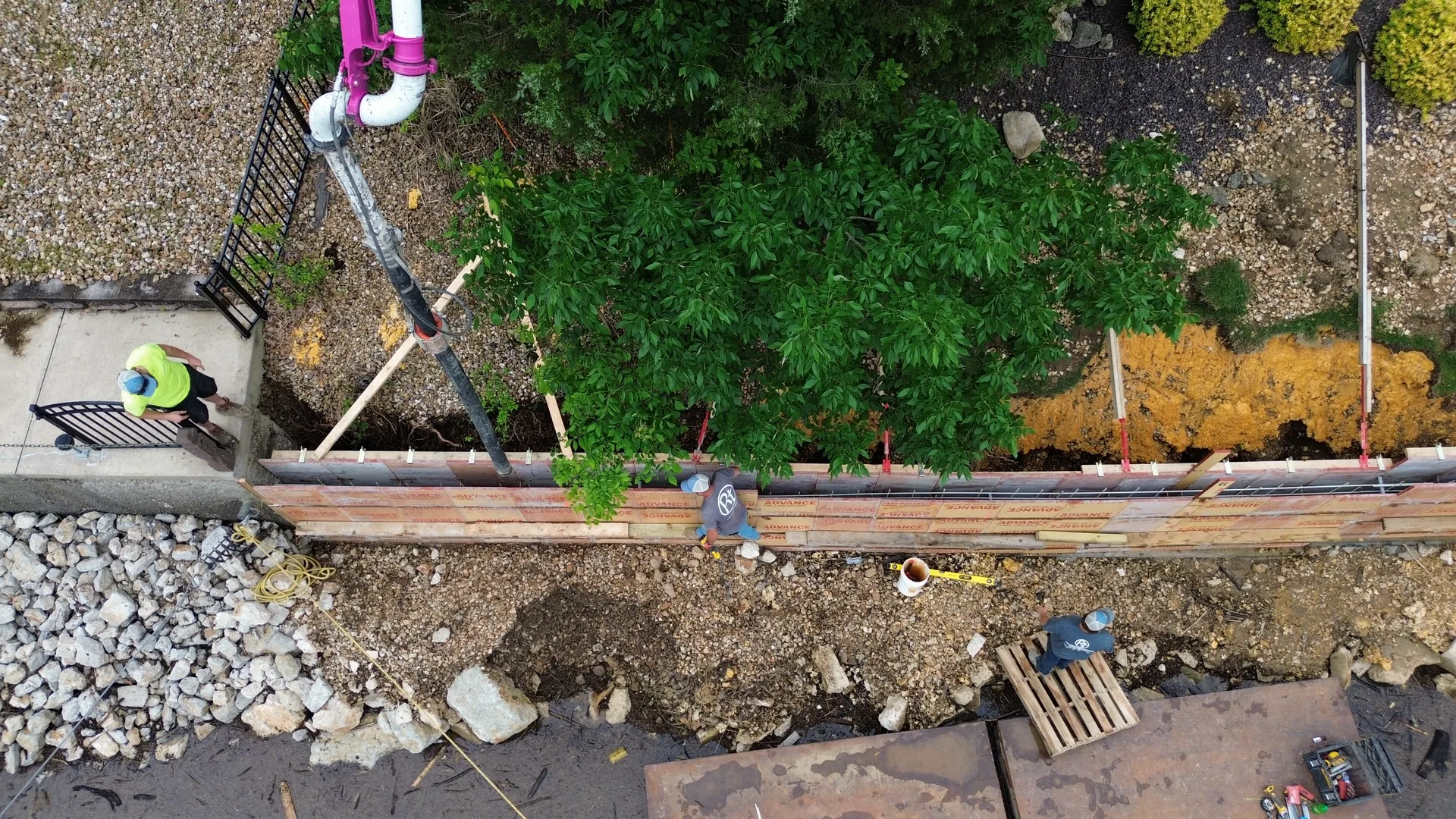
When it comes to fixing a failing seawall, there are three main approaches — and they're not equal on cost, disruption, or how long they last.
Excavation & replacement
Tearing out the wall (or a section of it) and rebuilding is the most expensive and disruptive route — permits, excavation, and new construction all take heavy equipment and time.
Cement grout
Filling sinkholes and leaks with cement grout is labor-intensive and adds weight to an already-stressed wall. These patches are rarely long-lasting.
Polyurethane resin
Our preferred method. Expanding polymer foam pushes water out, lifts and levels the wall, fills voids, stabilizes soil, and seals leaks — fast, low-disruption, environmentally friendly, and built to last.
More shoreline structures
Beyond wall repair, we build and reinforce the structures that hold your shoreline and your lake access in place.
Cable tie backs
A leaning or bowing wall gets anchored back into stable ground with a cable tie-back system — pulling the wall back toward plumb and holding it there.
Ramp bulk heads
Bulkheads built at boat ramps to hold the ramp edge and the ground behind it, so your approach to the water stays solid as lake levels move.
The right fix for your wall
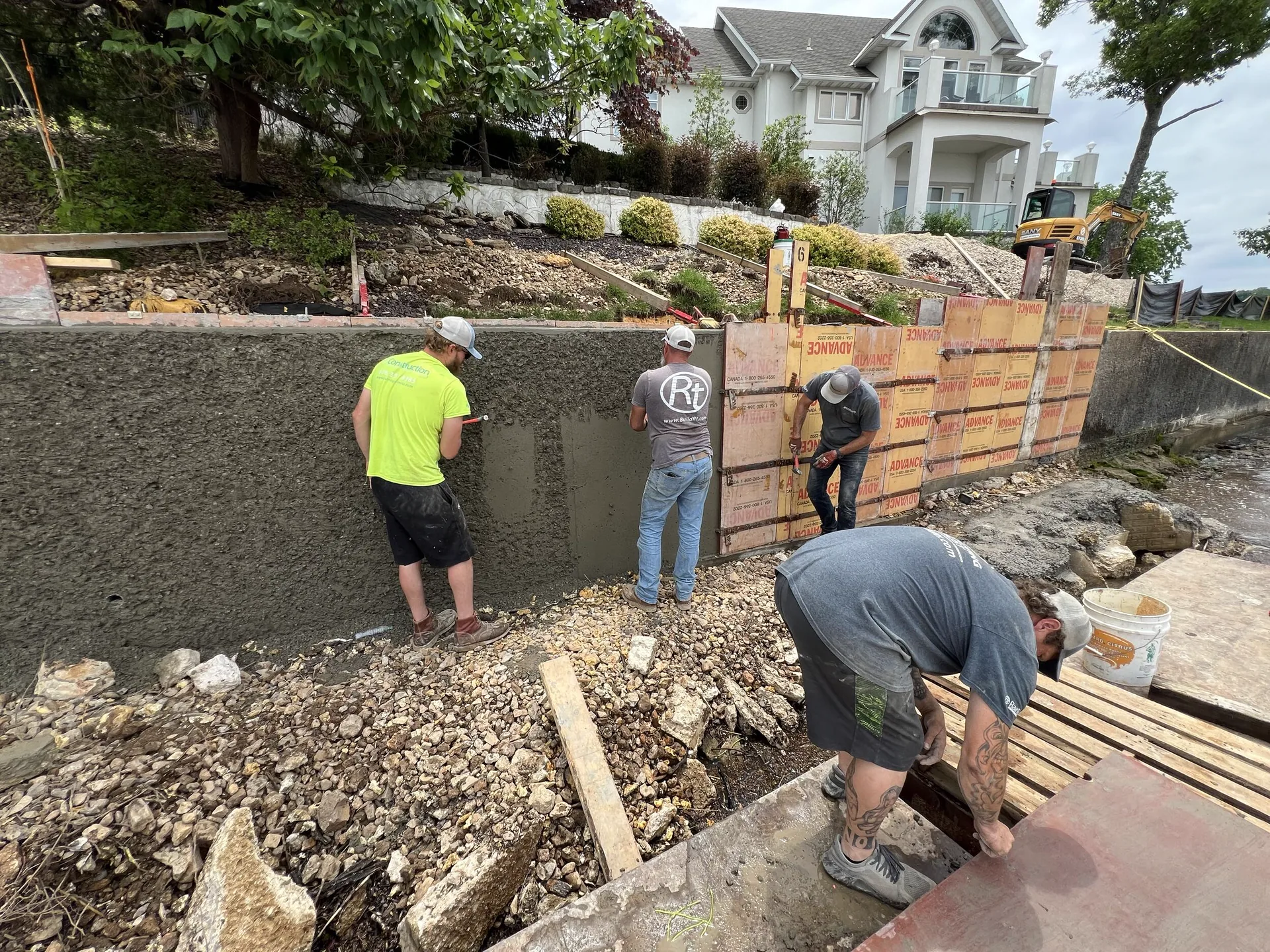
We repair residential and commercial seawalls with advanced polyurethane foam systems that react with moisture in the soil, expand to fill every void, and cure into a solid, watertight mass.
- Seals cracks & defects, fills voids, stabilizes soil
- Low-disruption repairs, most completed quickly
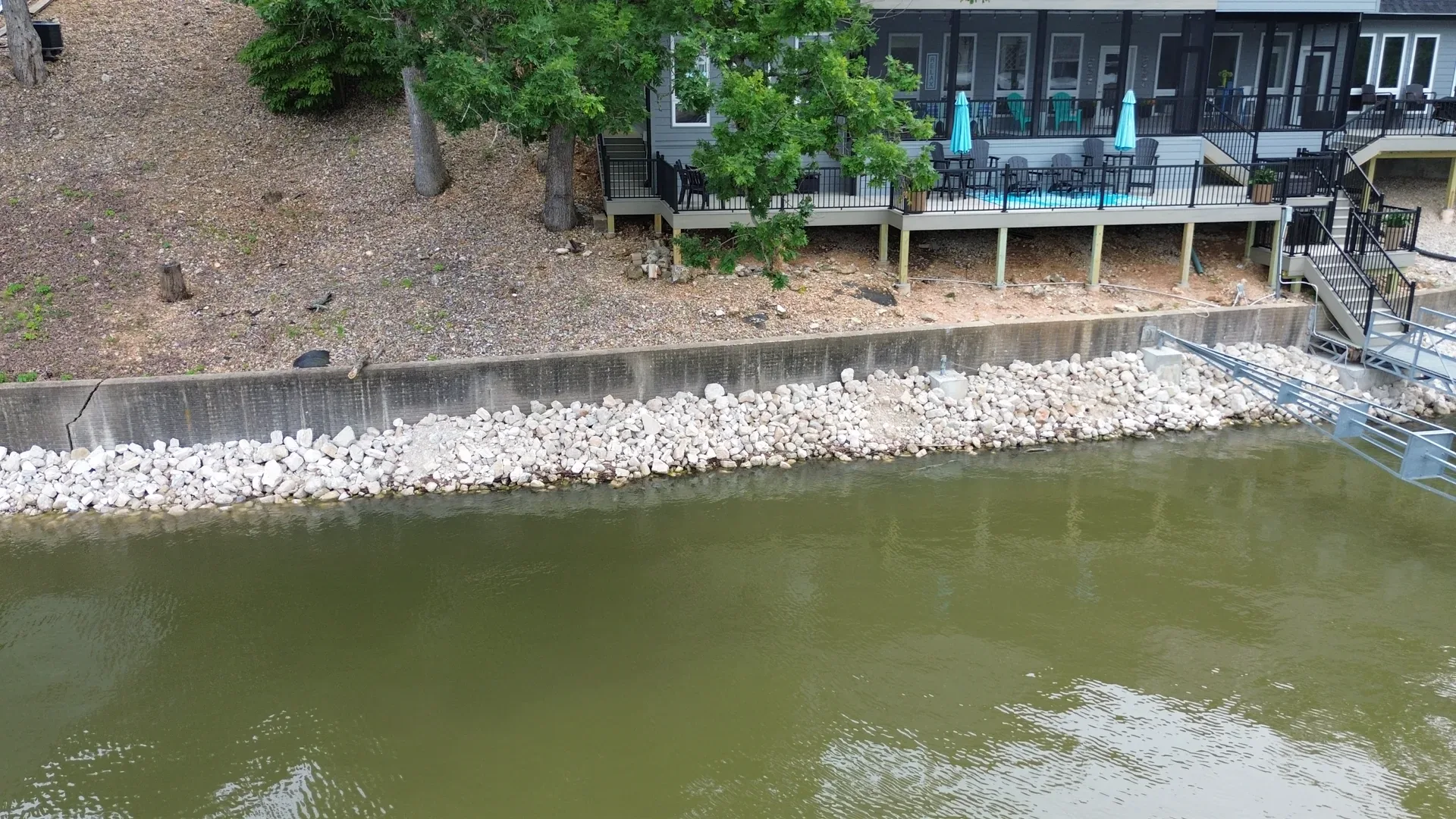
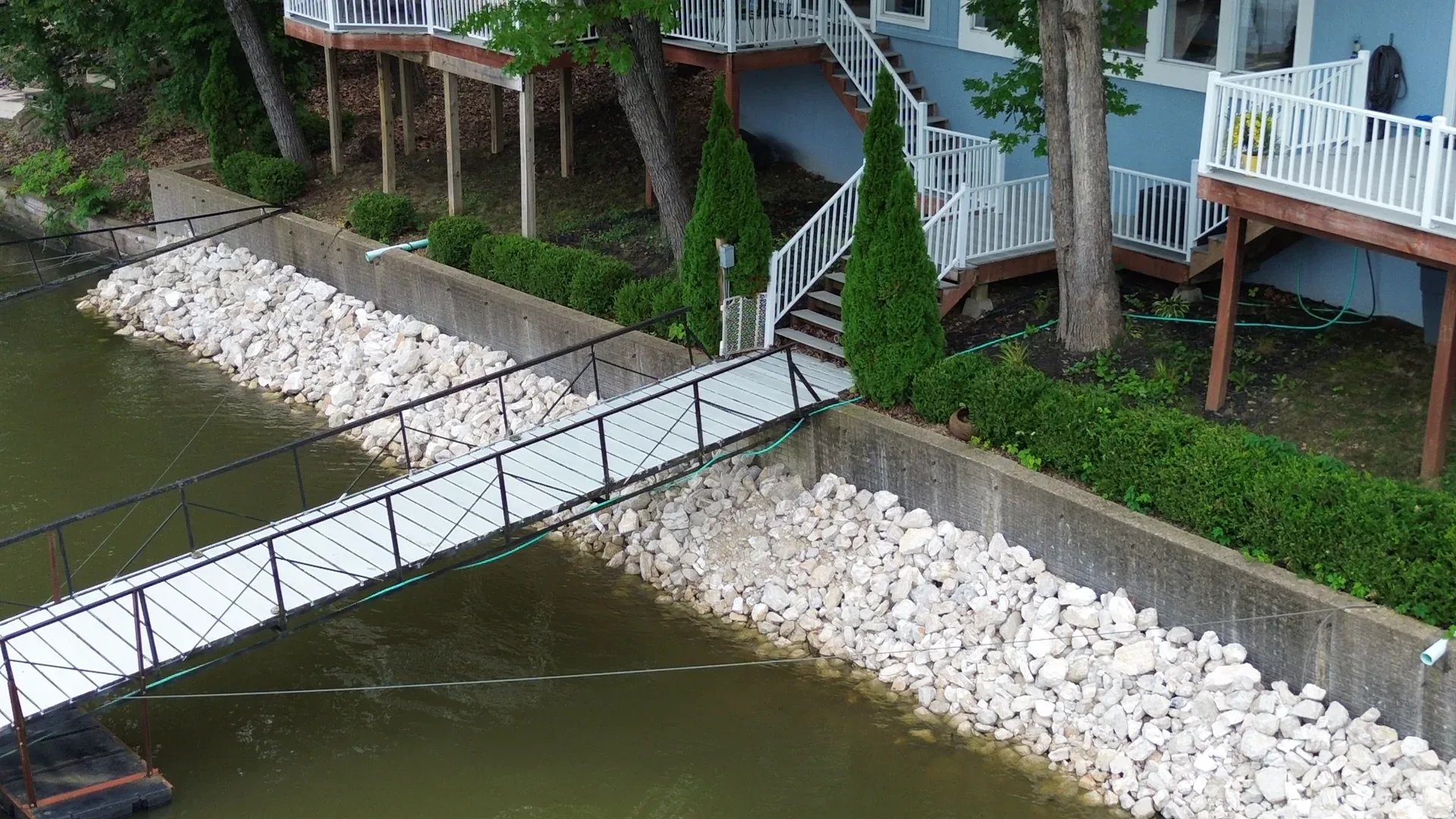
- Rip rap toe protection to stop future undermining
- Licensed, insured & bonded — satisfaction guaranteed
We take pride in precision work and stand behind every job. Serving Lake of the Ozarks and the surrounding lake communities — call us to schedule an inspection and a free estimate.
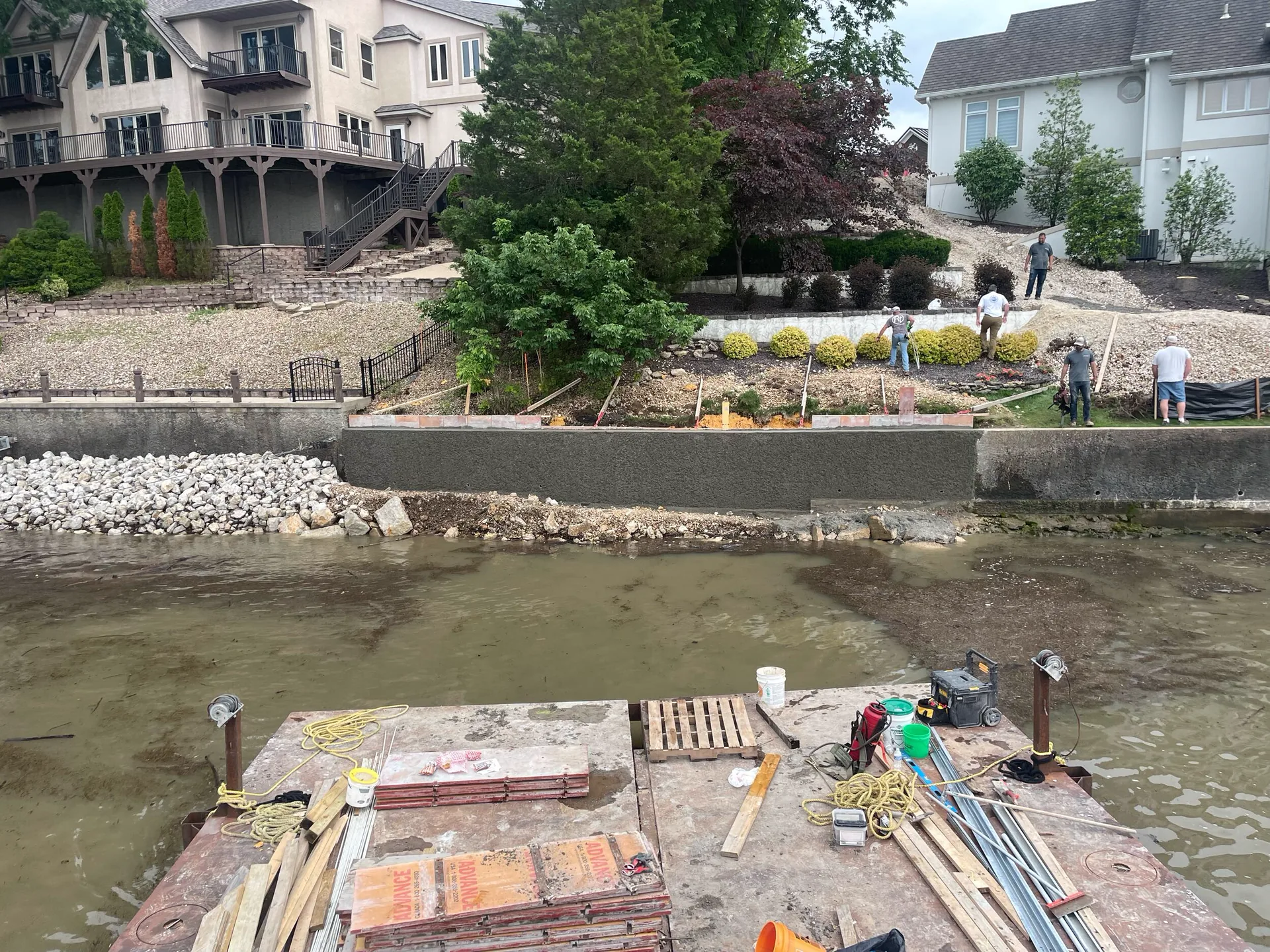
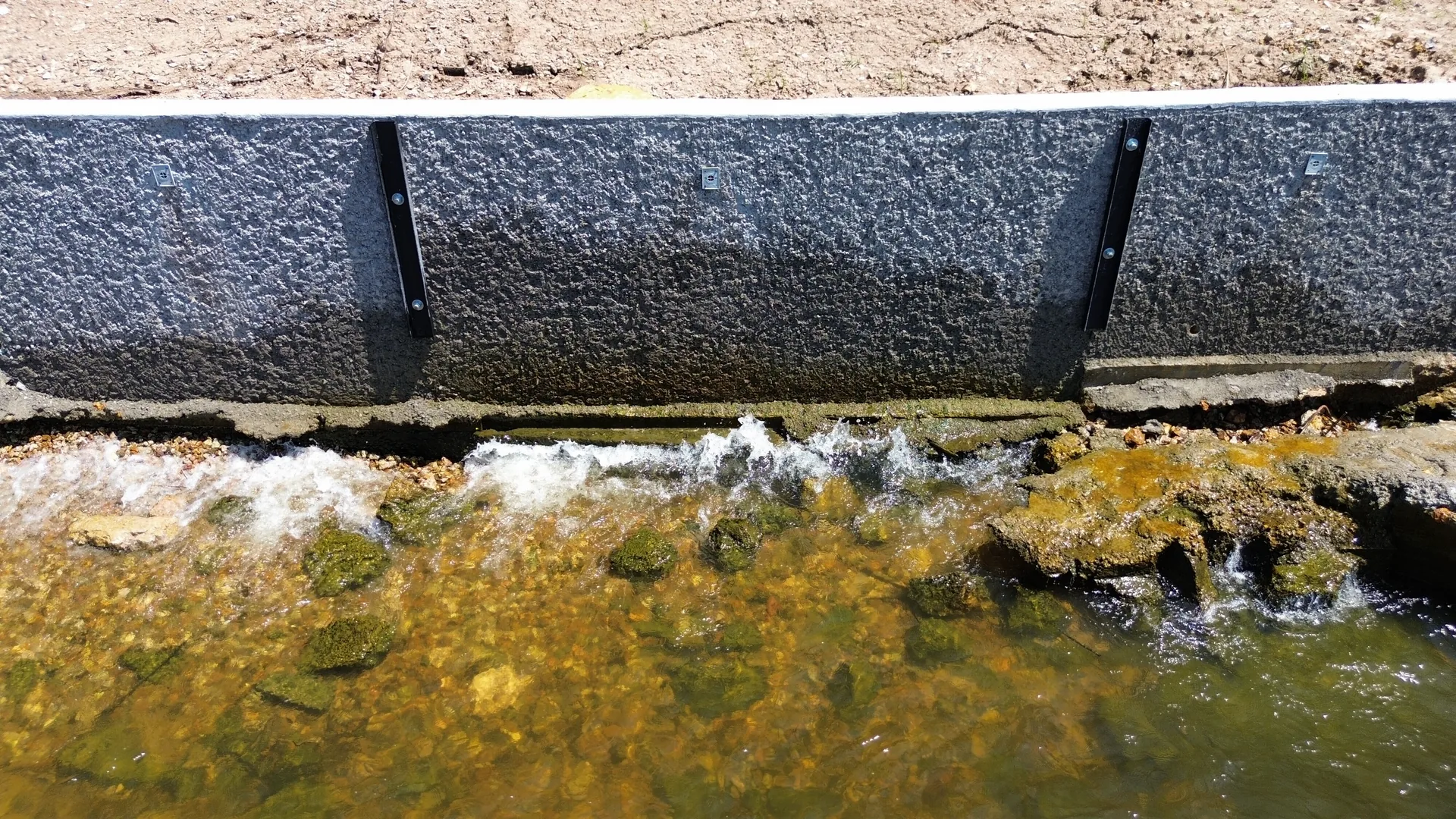
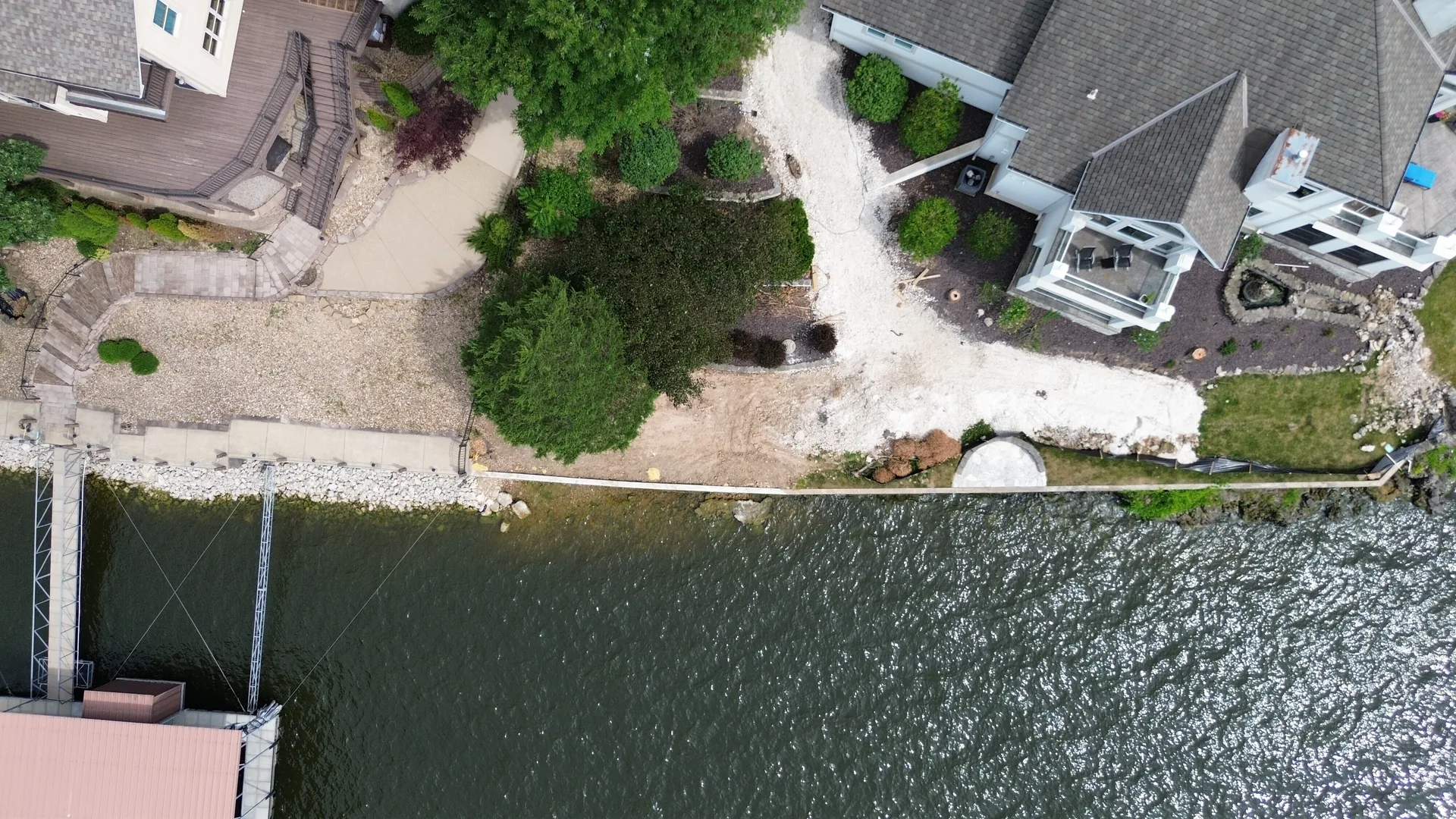
Shoreline & seawall projects
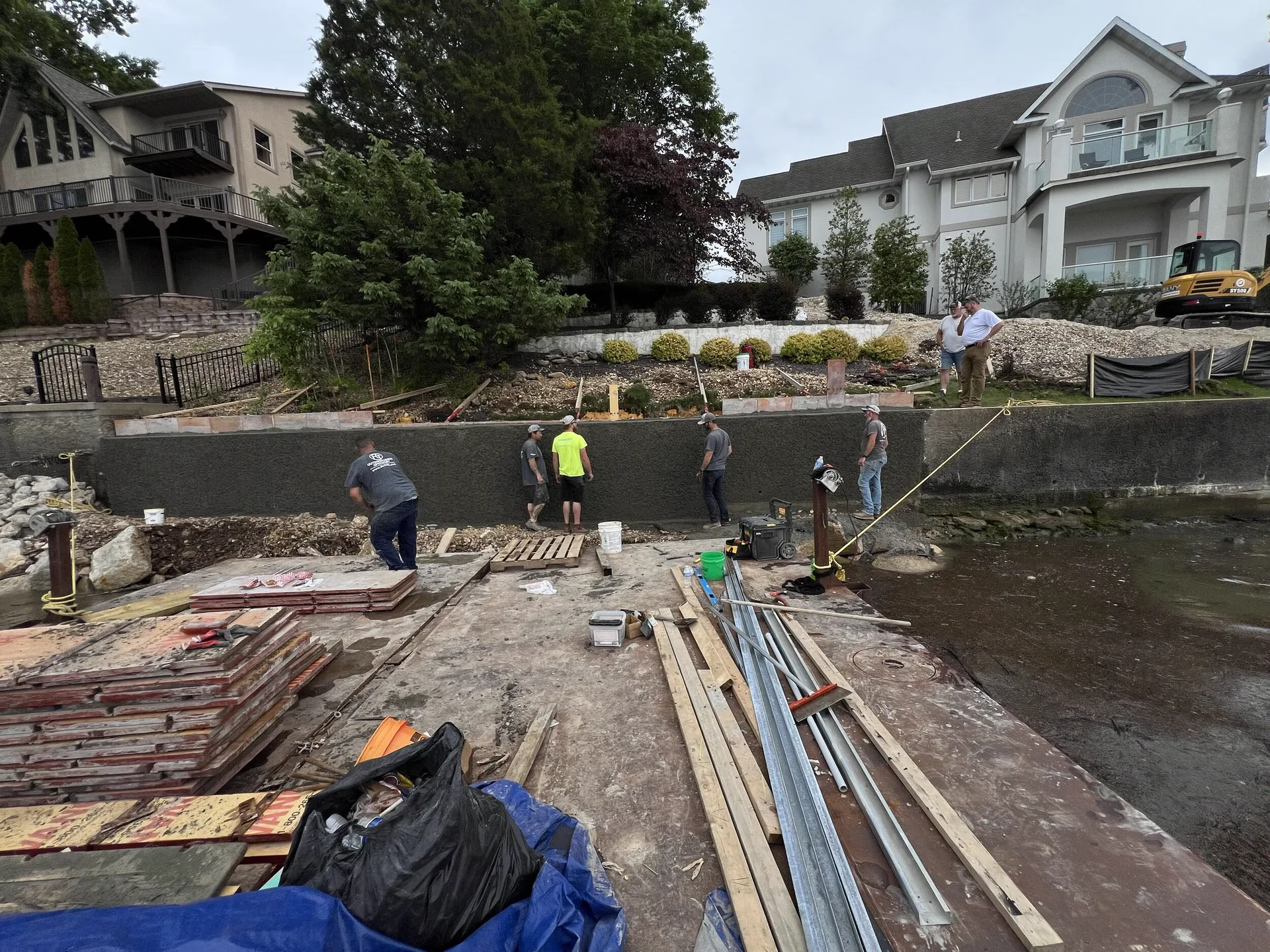
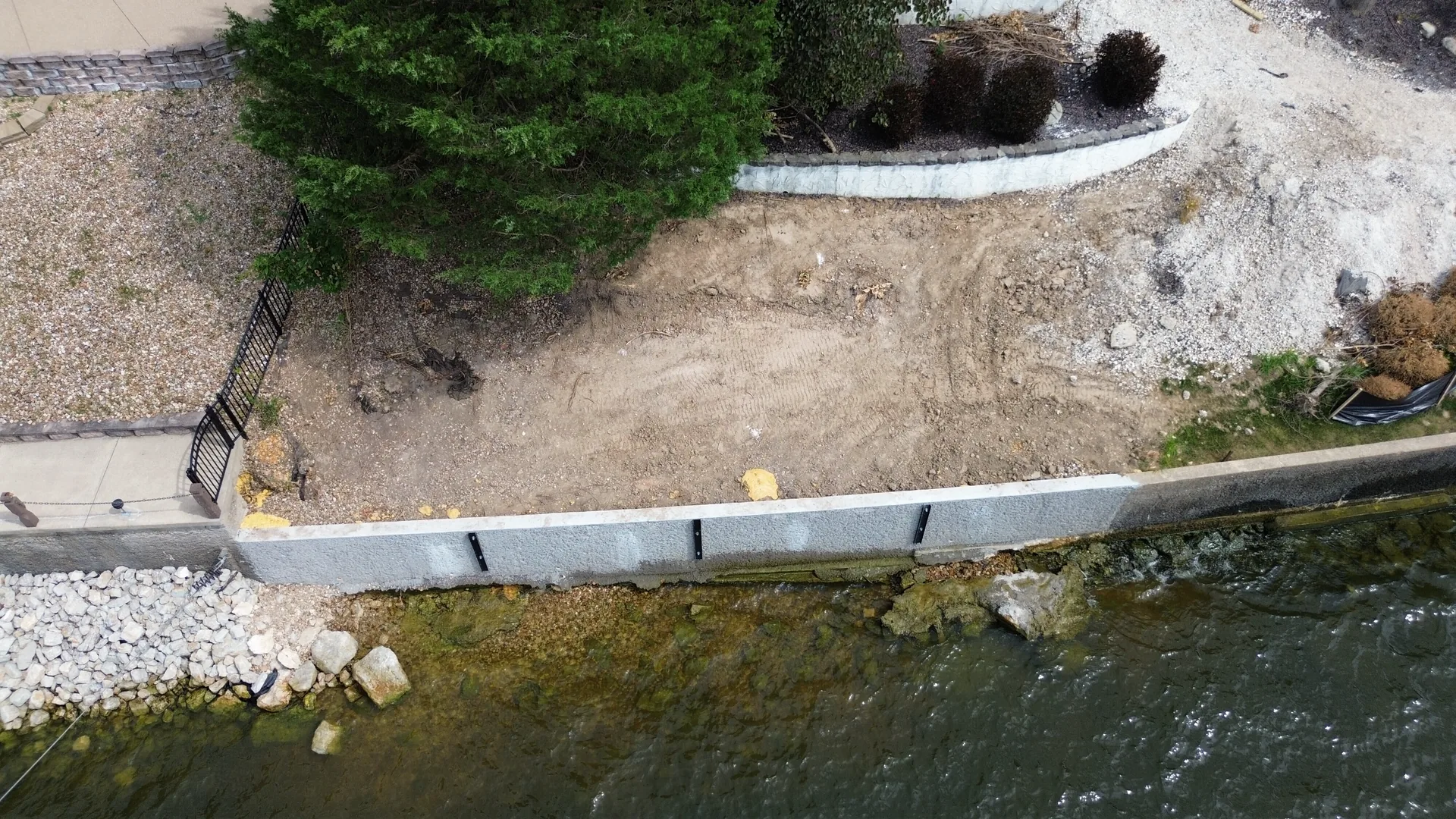
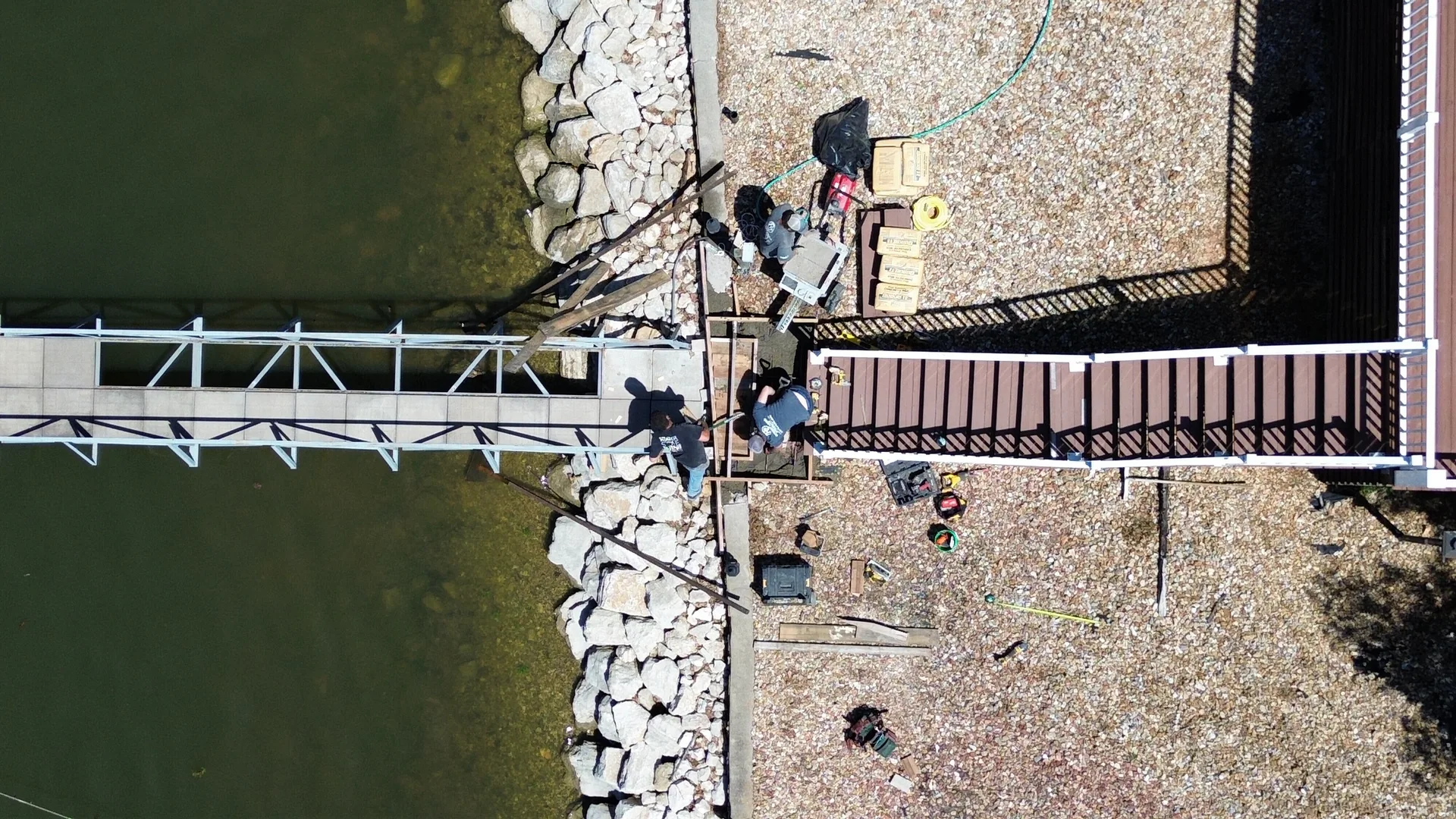
Rip rap toe protection, reinforced shorelines, and finished seawall work around the lake.
Catch it early. Keep your shoreline.
A leaning cap or a void behind the wall won't fix itself — and it only gets more expensive. Get a free, no-obligation seawall inspection and written quote.
Proudly serving Lake of the Ozarks and the surrounding lake communities.